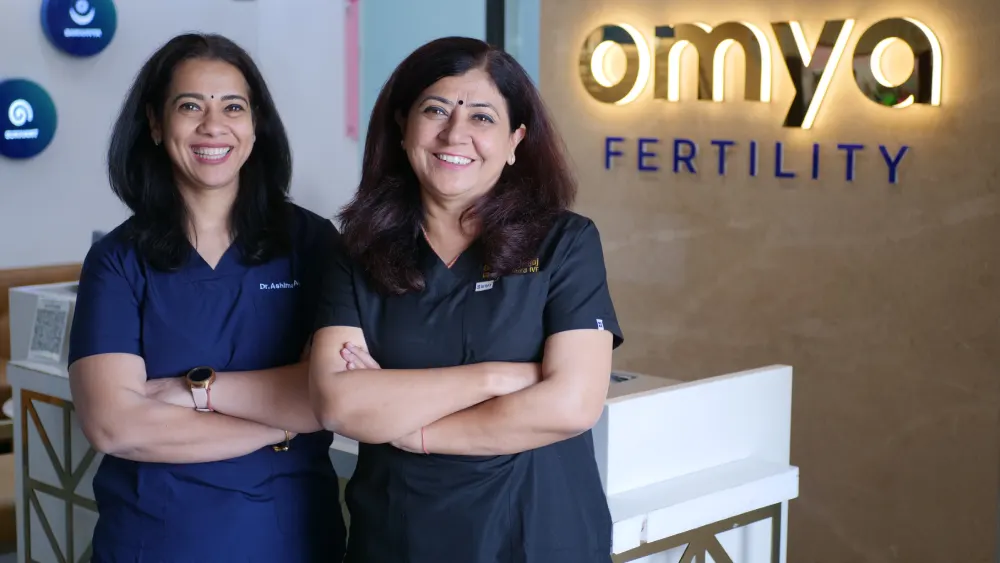
Fertility issues are more pronounced in many women after they are 35 years old. The predisposing factors could be early inability to conceive, a prolonged period between menstrual periods, or even past failures. Although it is not impossible to conceive, the effect of biological changes is that planning and timely medical care are especially significant. The use of assisted reproductive technologies, particularly IVF, provides an effective approach for women in this age group. As the best IVF centre in Delhi, we at Omya Fertility treat women over 35 years who are facing fertility issues with an individualised treatment plan, along with close supervision to enhance treatment outcomes and eliminate unnecessary delays.
IVF Options and Outcomes for Women Above 35 in Delhi
For women above 35, IVF offers a structured way to navigate age-related fertility changes while improving the chances of conception.
How Fertility Declines and Common Challenges After the Age of 35
The natural aging of the female reproductive system decreases the number of eggs and the quality of eggs, thereby lowering the female reproductive system’s fertility rate. Chromosomal abnormalities can affect fertilisation, embryo development, and implantation, especially after 35, and this can be found in eggs. Several women can also develop problems of reduced ovarian reserve, hormonal imbalance, fibroids, or endometriosis. All these struggles are not barring pregnancy. However, most of the time, they tend to render the normal conception unpredictable and time-bound.
Why is IVF Often Recommended After 35?
IVF has often been suggested in cases of women over 35, as they can have more control over the reproductive process. It assists fertility specialists in activating the ovaries to generate more than one egg, good embryos, and enhance the probability of implantation. IVF also reduces the duration to conception compared to natural conception. In the case of women who have been undergoing several months of infertility, IVF is a well-organized and medically directed way to go.
IVF Treatment Process for Women Above 35
The IVF process is initiated by an elaborate fertility examination comprising a hormonal test and an ultrasound examination of ovarian reserve. Ovarian stimulation is then rigorously modified to prevent over- and under-responses. Eggs are recovered, fertilized in a laboratory, and treated as embryos. Embryo transgression will be done according to the quality and availability of the uterus. At Omya Fertility, our IVF procedures for women above the age of 35 are prepared in a specialised manner aimed at maximising safety and success, but taking into consideration their respective health conditions.
Success Rates of IVF in Women Above 35
The success rates of IVF depend on age, health status, and ovarian reserve. Although the success rates are declining slowly after the age of 35, several women still deliver successfully through proper treatment planning. The quality of the embryo, the quality of the uterus, and medical expertise are significant factors. Prompt use of IVF treatment increases the chances of success, particularly when this approach is administered early enough, when fertility has not gone down any further. At Omya Fertility, women above 35 years old receive age-specific IVF procedures, professional clinical care, and developed laboratory services that lead to consistently high success rates.
Advanced IVF Techniques That Improve Outcomes After 35
Some high-technology advancements are used to enhance IVF outcomes among women in this age group. Blastocyst culture allows embryos to grow longer before transfer, improving embryo selection. Embryo genetic screening helps identify chromosomally normal embryos and thereby reduces the risk of miscarriage. Improved implantation rates can also be achieved through frozen embryo transfer cycles, which give the body time to recover from ovarian stimulation. These techniques are especially useful for women with age-related fertility issues.
Health and Lifestyle Factors Affecting IVF Success
General health is very effective on IVF success. Healthy weight, stress management, avoiding smoking and alcohol, and rehabilitating medical disorders like thyroid disorders or diabetes can be used to enhance treatment outcomes. Proper nutrition and frequent follow-ups may help to balance the hormones and remain healthy in the uterus. IVF doctors frequently advise lifestyle optimization as a method of establishing an optimal environment for conceiving a successful pregnancy through IVF.
Conclusion
IVF is a sure and efficient fertility therapy for women over 35, provided that it is managed by a rigorous medical evaluation and individual care. Although the challenges related to old age are present, recent IVF methods and early intervention have the potential to boost successful pregnancy. Learning about fertility variations, attaining the right treatment, and having a skilled medical staff are the keys to success. At Omya Fertility, we offer age-oriented, structured IVF assistance for women over 35 that guides them through all aspects of their fertility process.